Coachella Festival
A Short Historical Recap of the Coachella Music Festival
The Coachella Valley Music and Arts Festival, simply known as Coachella, is more than just a music festival; it is a cultural landmark that has defined the modern festival era.
Humble Beginnings & The First Outing (1999)
Coachella was founded by Paul Tollett and Rick Van Santen of Goldenvoice, originally as a response to the mainstream rock festivals of the time. The inaugural festival on October 9-10, 1999, was held at the Empire Polo Club in Indio, California. It was a financial risk, headlined by the reunion of the iconic band Tool and featuring a groundbreaking, legacy-cementing performance by Beck. Despite critical acclaim for its lineup—which included Rage Against the Machine, The Chemical Brothers, and Morrissey—the first year lost money. However, it established the festival’s core identity: a diverse, genre-blending lineup focused on rock, indie, electronic, and hip-hop, set against a backdrop of large-scale art installations.
The Rise to Cultural Dominance (2000s)
After a hiatus in 2000, Coachella returned in 2001 and began its steady climb to becoming an indispensable event. Key moments in its ascent include:
Reunions & Rare Performances: Coachella became famous for orchestrating once-in-a-lifetime reunions and rare appearances. Landmark moments include:
2003: Iggy Pop and the Stooges reunited.
2004: Madonna made a surprise appearance during the Daft Punk set, which itself became the stuff of legend, catapulting the French electronic duo to new heights in the US.
2006: Daft Punk‘s iconic pyramid performance.
2007: Rage Against the Machine reunited.
2009: Paul McCartney and The Cure headlined, bringing classic legacy acts to the desert.
The Modern Era & Global Phenomenon (2010s – Present)
The 2010s saw Coachella explode into a global cultural event, driven by social media and the rise of the “influencer.” It became as much about fashion, art, and celebrity sightings as it was about music. Major acts from this era include:
2012: The holographic performance of Tupac Shakur alongside Dr. Dre and Snoop Dogg was a technological marvel that made worldwide headlines.
2017: Beyoncé headlined, delivering a performance so powerful and culturally significant (celebrating HBCU culture and Black sisterhood) that it was dubbed “Beychella.” It is widely considered one of the greatest live performances of all time and was later released as a Netflix film.
2018: Eminem headlined, with a surprise guest-filled set.
2023: Frank Ocean‘s controversial, yet highly anticipated, headlining set was followed by BLACKPINK making history as the first K-pop girl group to headline the main stage.
Future Plans for the Event
Coachella’s future seems focused on consolidation, expansion, and evolving its cultural footprint.
Expansion of the Festival Grounds: There are confirmed plans to expand the physical footprint of the Empire Polo Club. This will allow for more art installations, potentially new stages, and better crowd flow to improve the attendee experience as the festival continues to sell out its 125,000-person daily capacity.
Permanent Home and Multi-Weekend Format: The festival recently signed a new long-term contract to remain in Indio until at least 2050. The two-weekend format (with identical lineups) is firmly established and will continue, cementing its economic and cultural impact on the Coachella Valley for decades to come.
Diversification of the Lineup: While rock and indie will always be part of its DNA, the future lineup will continue to reflect popular music trends. This means an even greater emphasis on:
Latin Music: Following the massive success of Bad Bunny headlining in 2023.
K-Pop and Global Acts: The headline slot for BLACKPINK opened the door for more major international acts to top the bill.
Pop and Hip-Hop: These genres will remain central to appealing to a massive, global audience.
Enhanced Experiences and Technology: Expect Coachella to continue investing in immersive art and cutting-edge technology. This includes more interactive installations, potentially exploring the metaverse with virtual attendance options, and continuing to set the standard for live-streaming major performances.
In summary, Coachella’s future is one of solidified presence. It will continue to be a trendsetting barometer for popular culture, adapting its musical lineup to the times while investing heavily in its physical home to ensure it remains the most iconic music festival in the United States.
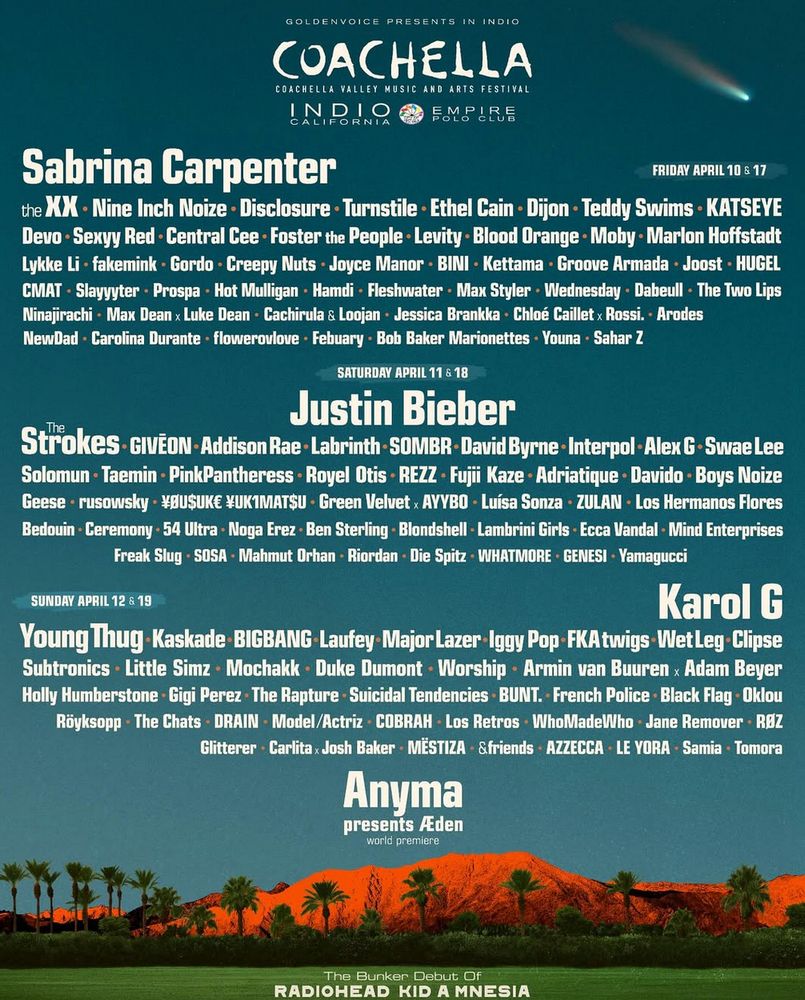
Coachella headliners for 2026: Karol G, Justin Bieber, Sabrina Carpenter and Anyma